Case study · Developer tools

Benchmarks you can actually check.

An open benchmark for coding-agent harnesses, designed and built for node-q. Every version runs on the same model and tasks, and every score comes with its uncertainty.

Visit live site
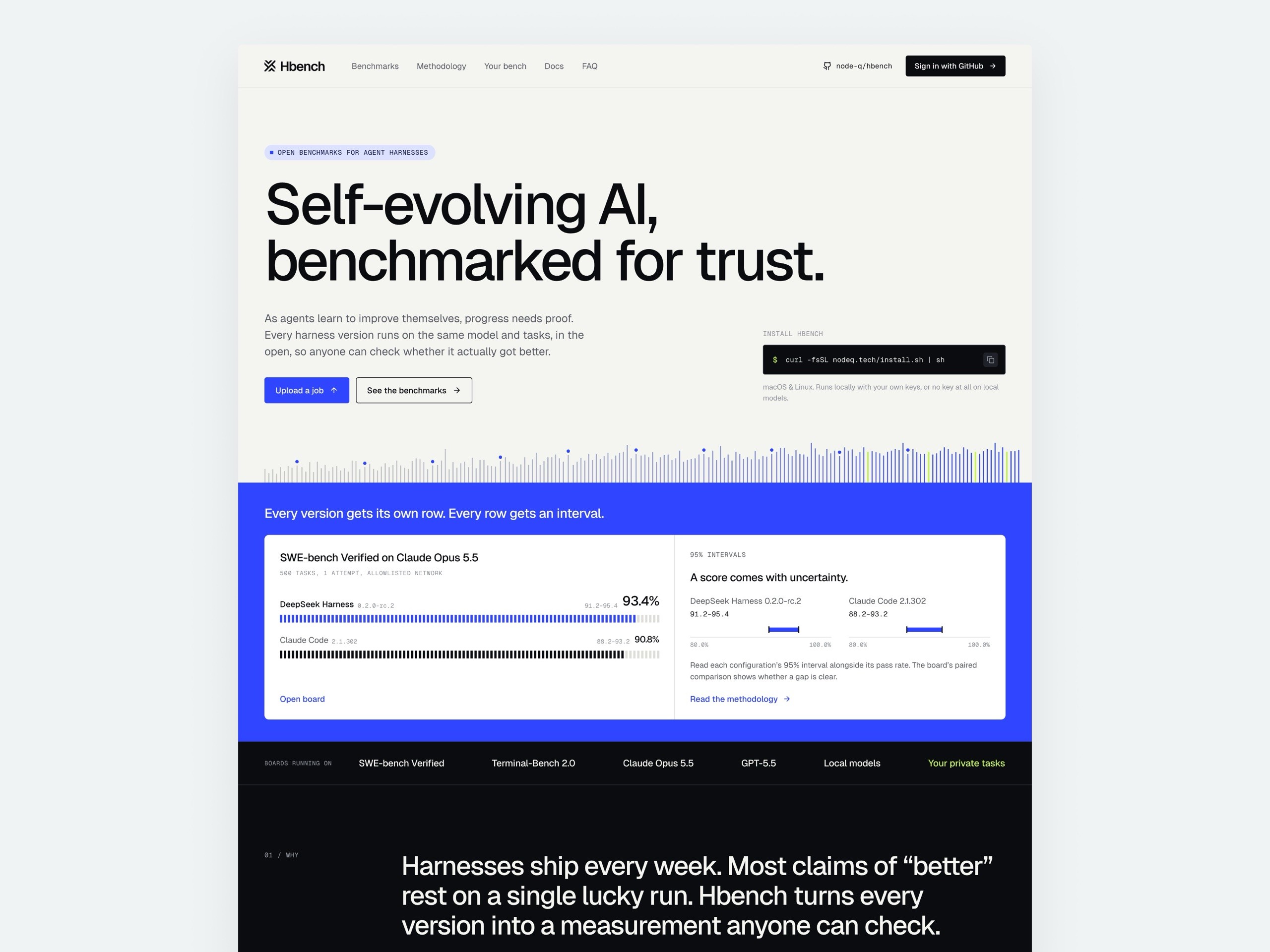
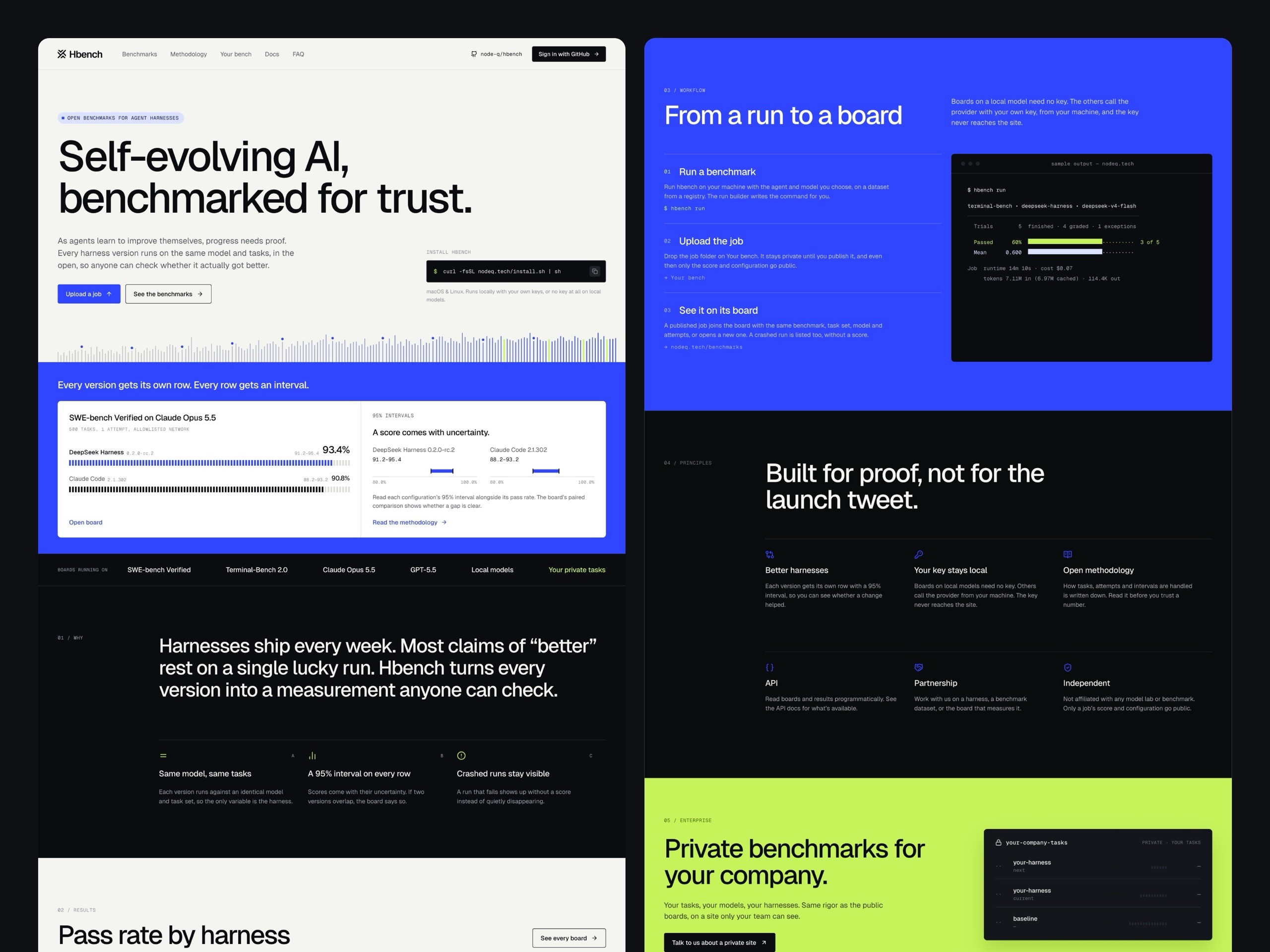
The HBench site in two columns: the homepage and the workflow
Client
node-q
Year
2026
Scope
Design + development: brand, product, design system, web

(01) The brief

Harnesses ship every week. Most claims of “better” rest on a single lucky run.

Challenge

node-q builds hbench, an open engine that runs coding agents like Claude Code, Codex and Gemini CLI on benchmark tasks. They needed a public home for the results that engineers would trust, not another leaderboard with one big number.

Approach

We designed and built the brand and the board around a single idea: a score always comes with its uncertainty. Every version gets its own row, every row gets a 95% interval, and crashed runs stay visible instead of quietly disappearing.

(02) The product

Sixteen pages across desktop, tablet and mobile, each in light and dark. A few of them below.
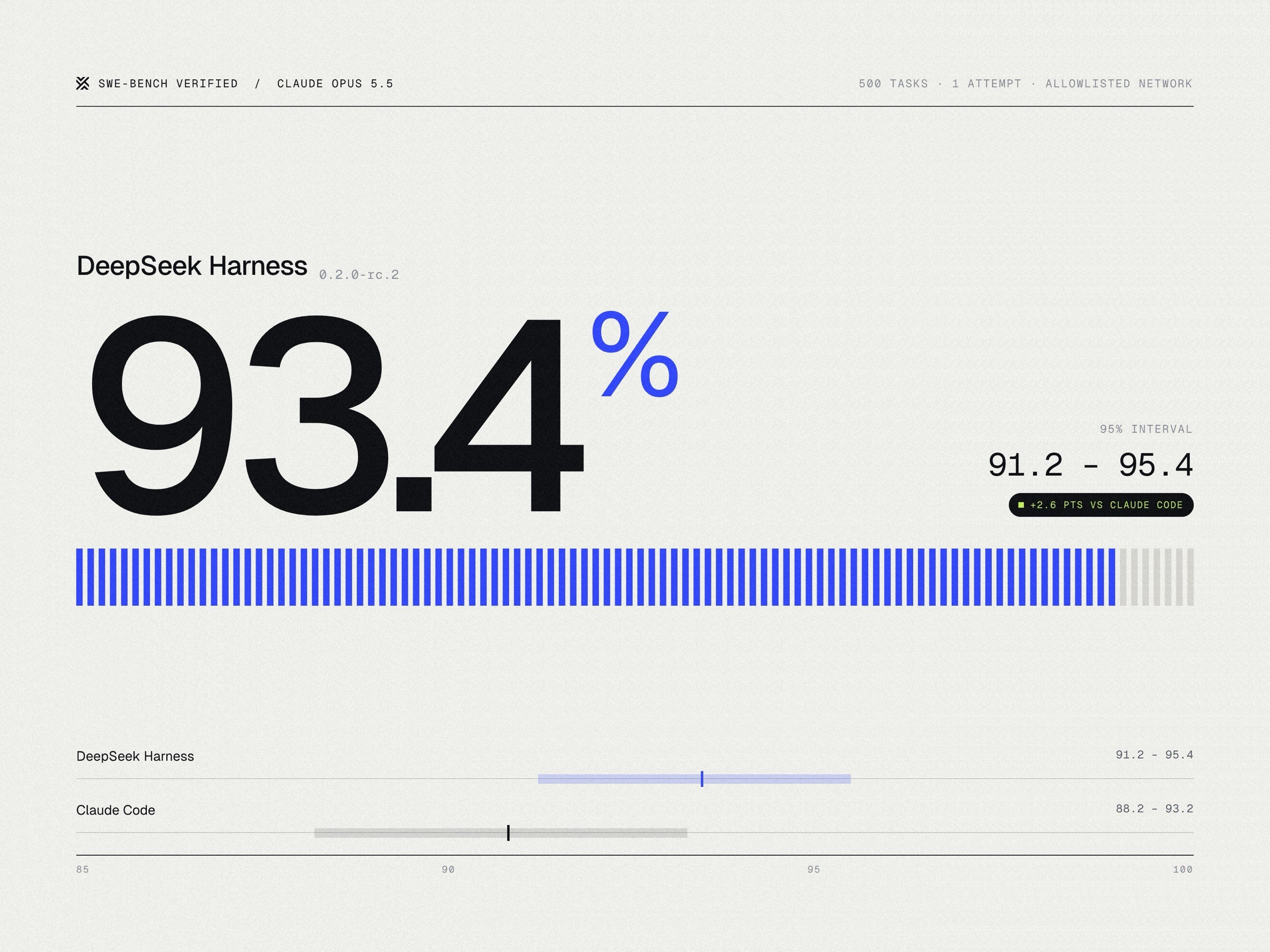
Score view: the number, its interval, and the run behind it.
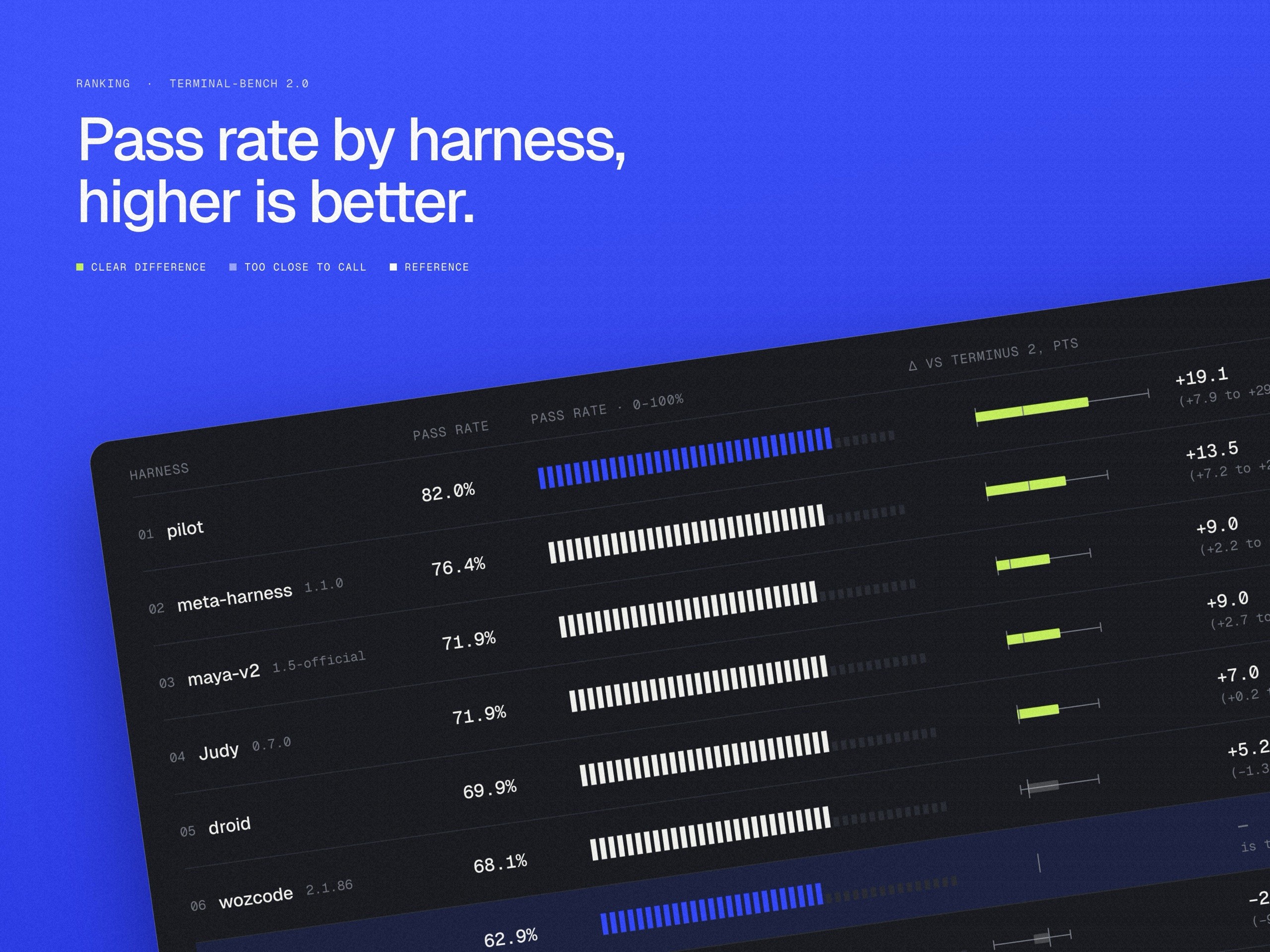
Leaderboard: pass rate by harness, higher is better.
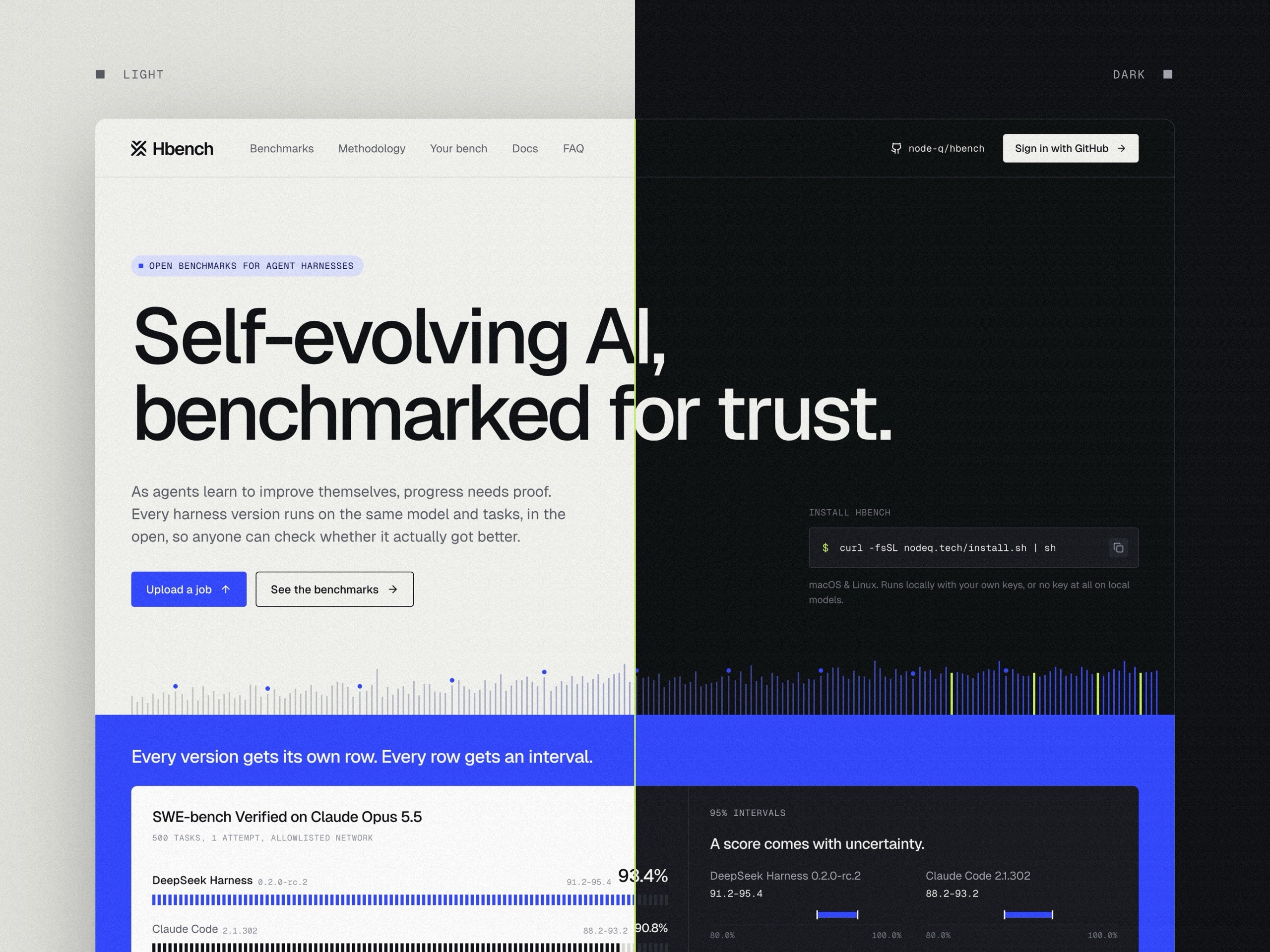
Light and dark, from the same tokens.
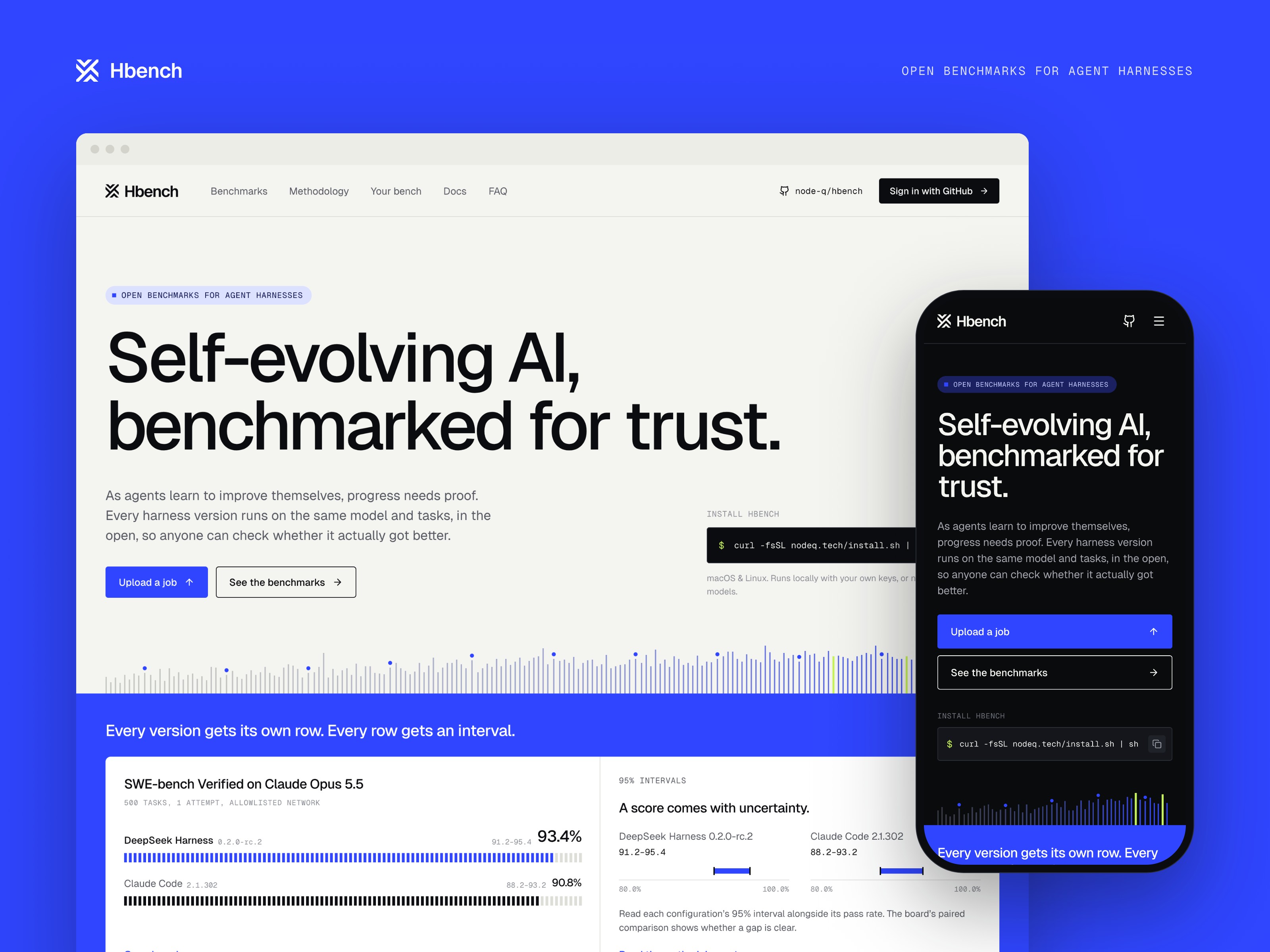
Desktop and mobile: the same page and the same install command on every screen.
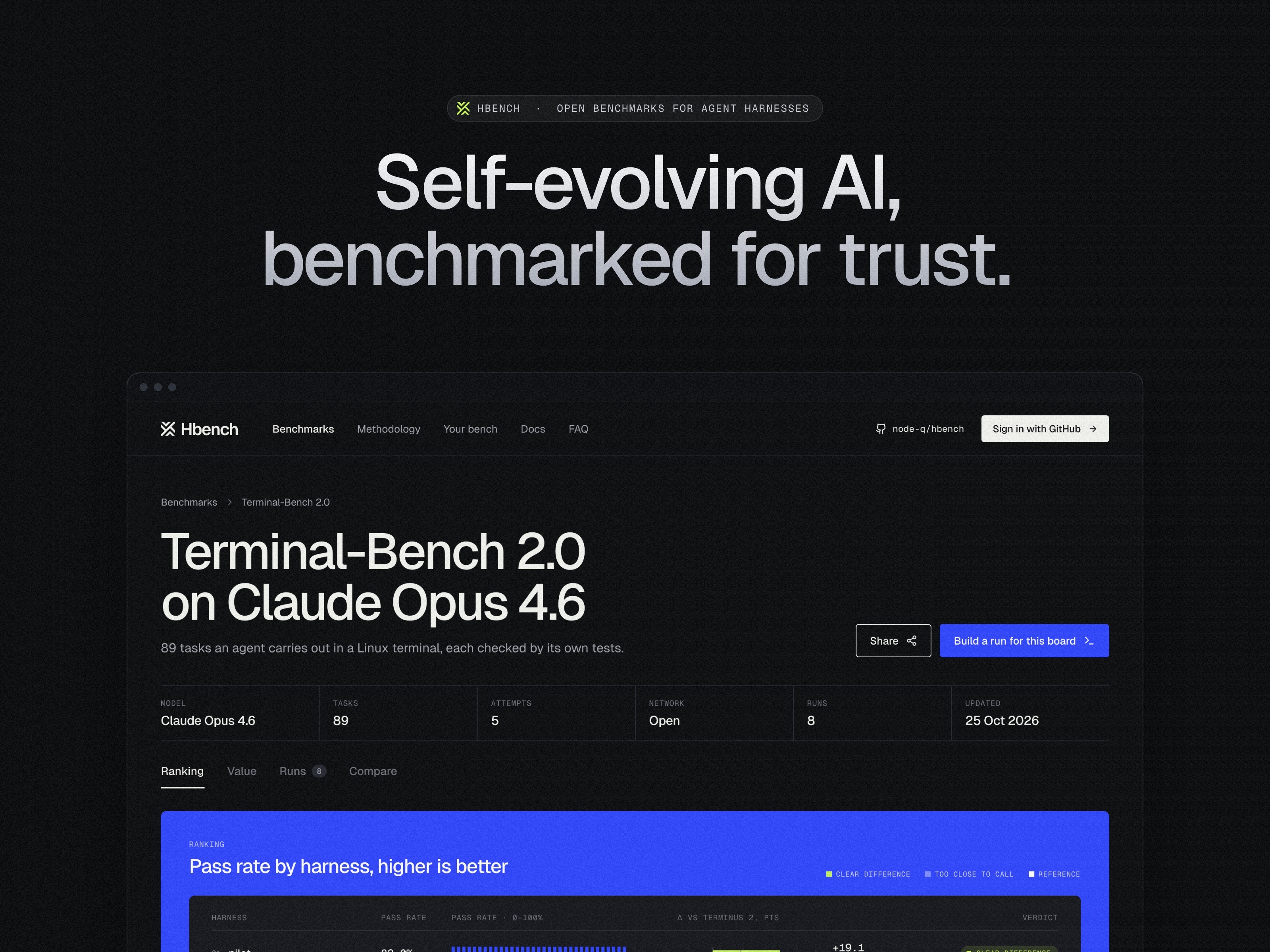
A board page: Terminal-Bench 2.0, under the line that sums it up.
The homepage, from install to the first board.

(03) The identity

A mark drawn from the loop it measures.

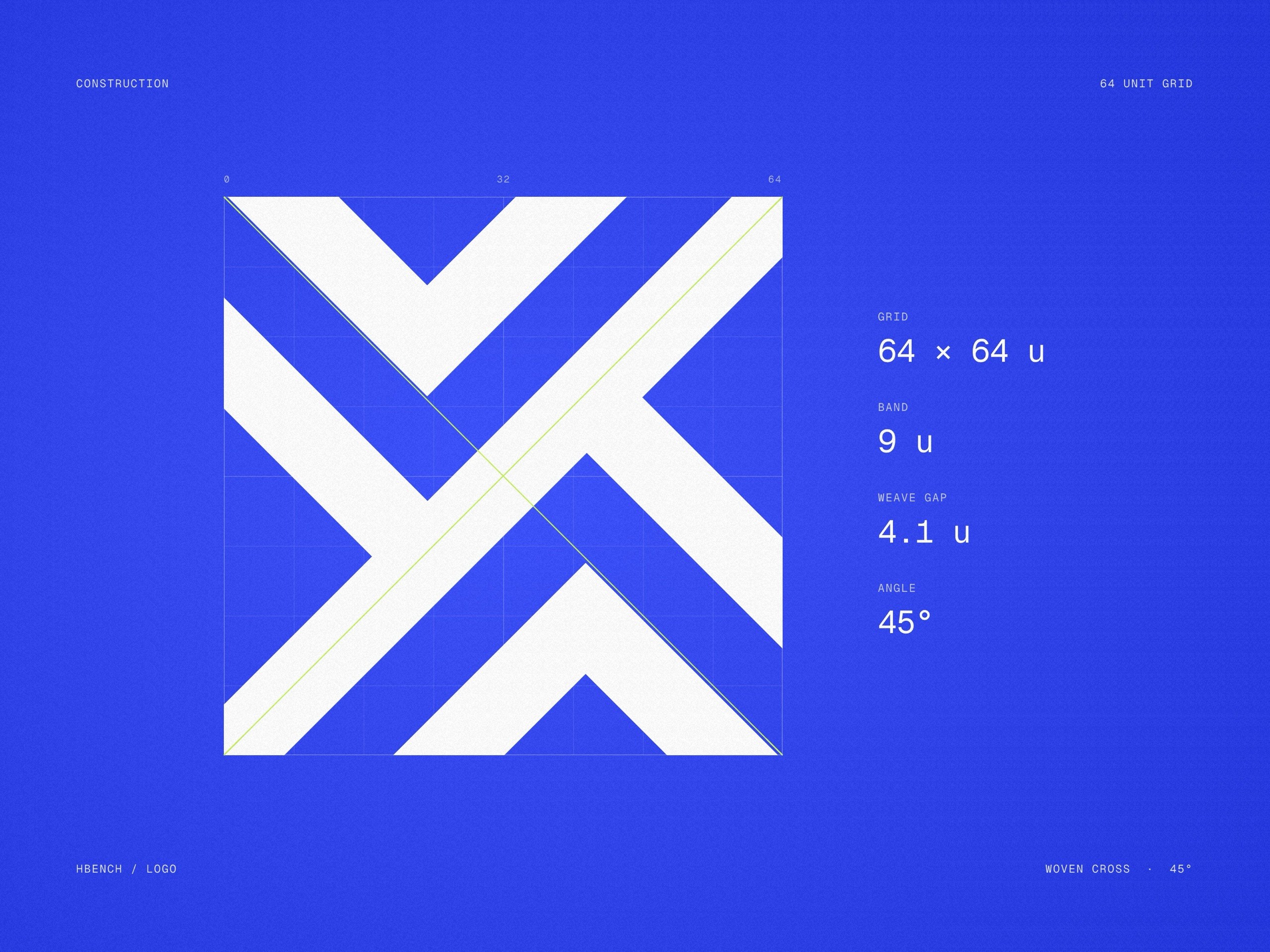
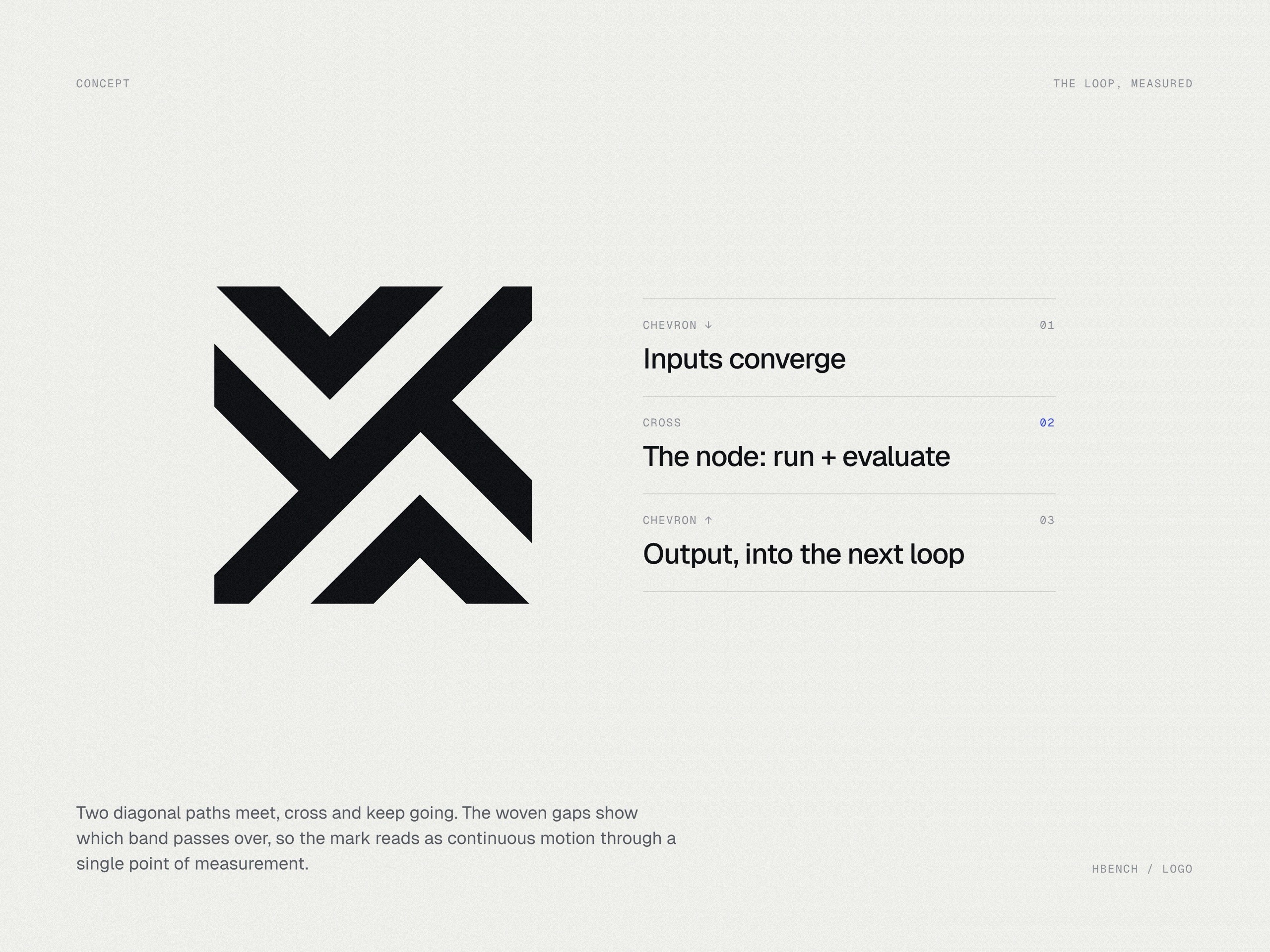
Two diagonal paths meet, cross and keep going. Inputs converge, the node runs and evaluates, and the output feeds the next loop. The same 45° grid sets the type, the icons and the progress bars.
The Hbench mark on Electric.
Concept: inputs converge, the node runs, output loops back.
Construction on a 64-unit grid, 9-unit strokes at 45°.
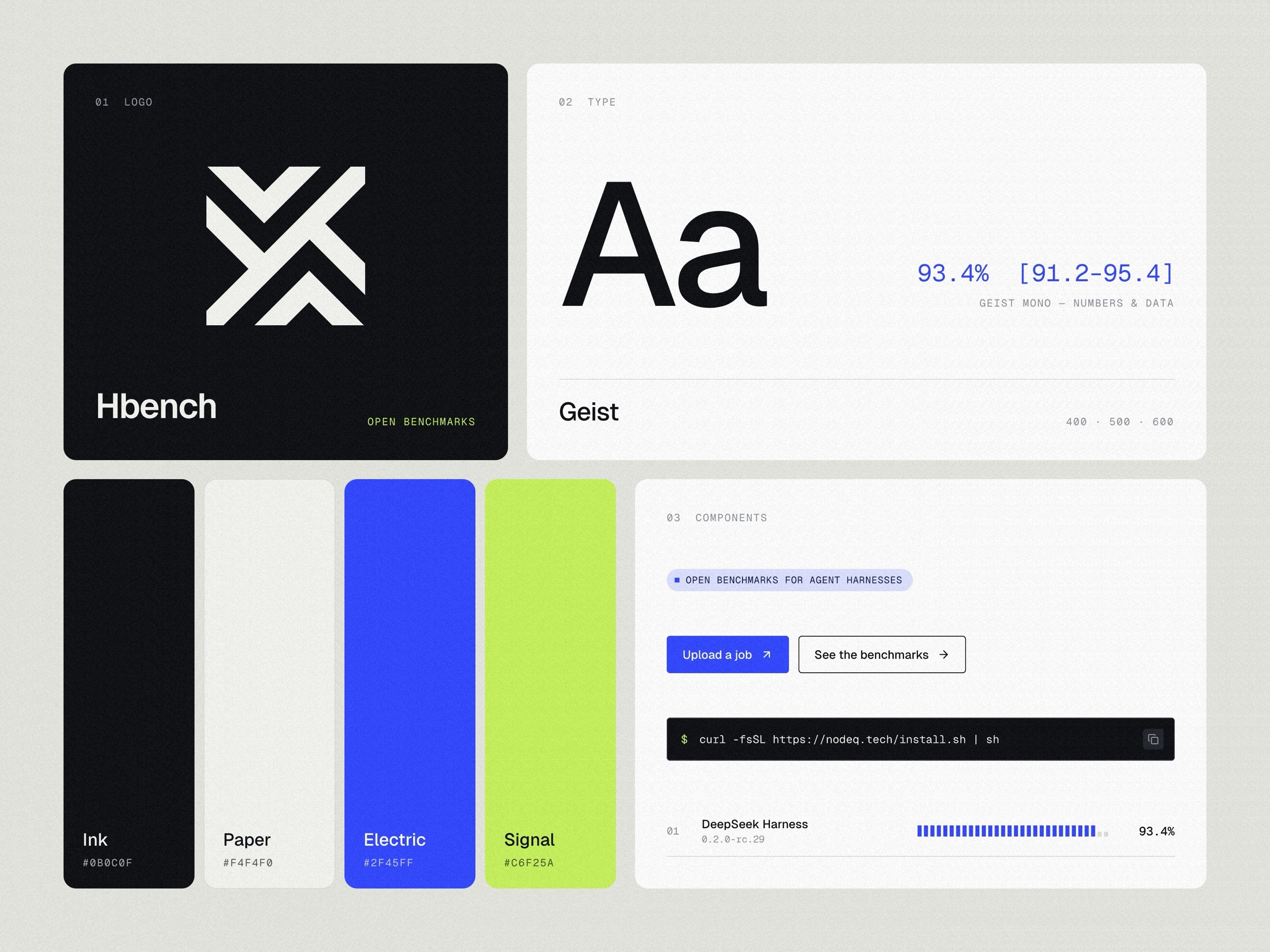
Design system: Ink, Paper, Electric and Signal, set in Geist.

(04) What shipped

A public board that’s live at nodeq.tech, designed and built to keep growing with the team.

16
Pages designed
3
Breakpoints, desktop to mobile
2
Themes from one set of tokens
95%
Interval on every score